Cryotherapy
Three minutes of whole-body cold therapy to support recovery, circulation, and energy. Serving Lisle, Naperville, Downers Grove & Chicago’s western suburbs.
Book a SessionWhat is cryotherapy?
Cryotherapy, also called cold therapy, is a wellness and recovery treatment that exposes the body to extremely cold temperatures for a short period of time (typically two to four minutes). The practice has been used in some form for centuries to reduce pain, inflammation, and swelling.
Modern cryotherapy most commonly refers to whole-body cryotherapy (WBC), where a person stands in an enclosed chamber cooled to temperatures between -200°F and -300°F (-129°C to -184°C) using nitrogen vapor or refrigerated cold air. During a session, the body’s natural response to extreme cold triggers vasoconstriction (narrowing of blood vessels), followed by vasodilation once the session ends. This process is believed to flush metabolic waste, deliver oxygen-rich blood to tissues, and release endorphins, contributing to reported benefits for athletic recovery, muscle soreness, inflammation, skin health, mood, and energy.
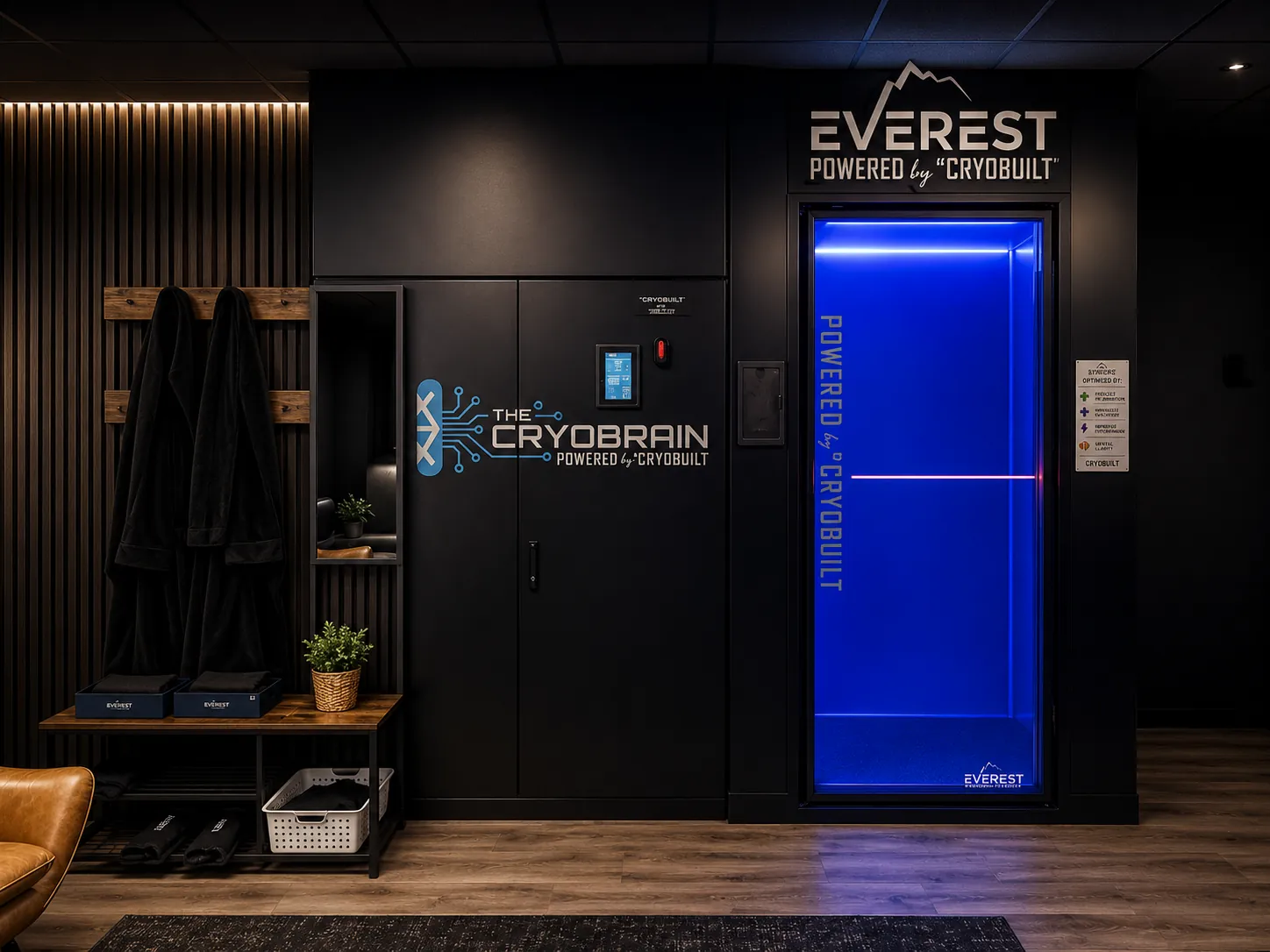
How Cryotherapy Works
Cold Exposure
Three minutes of very cold dry air, around -200°F to -240°F, in a standing chamber. Bracing, not painful. Short enough to fit between training or into a busy day.
Circulatory Response
The cold drives vasoconstriction, then vasodilation as you warm back up. That hot-and-cold shift moves blood through tissues and is part of why the response feels so distinctive.
Norepinephrine Surge
Brief cold stress triggers a release of norepinephrine, which is the physiology behind the mood and energy lift many clients report for hours after a session.
Recovery Signal
Cryo may help reduce post-exercise soreness and modulate inflammatory markers when used after intense training.
What Cryotherapy Can Support
Cold therapy is one of the most popular recovery modalities in sport and longevity circles. Clients use it for different reasons, but these are the ones we see most often:
- + An early-morning wake-up for focus and alertness, no caffeine required
- + Post-training muscle soreness and perceived fatigue
- + Inflammation modulation and joint discomfort
- + Circulation and a brisk midday energy reset
- + Mood and focus through the norepinephrine response
- + Stacking with sauna or HBOT for layered recovery
- + A short, repeatable habit for active clients
Cryotherapy is not intended to diagnose, treat, cure, or prevent any disease. Consult your healthcare provider.
Cryotherapy vs ice bath.
Both use cold to trigger a recovery response. Different formats, slightly different experience.
Cryotherapy
Three minutes of very cold dry air in a standing chamber. Quick in and out, no water, no soaking your hair, easy to slot before or after a workout.
- · Up to 3:30
- · Dry air, standing chamber
- · No towel, no shower, no downtime
- · Strong norepinephrine response
Ice Bath
A few minutes submerged in cold water, head usually out. Longer exposure than cryo, water transfers heat much faster than air, so the cold feels more intense for the same duration.
- · Typically 5 to 10 minutes
- · Cold water, full submersion
- · Towel and change-out required
- · Different feel, similar end goal
Not sure where to start? Most clients begin with a single cryo session to feel the response, then layer in infrared sauna or HBOT if recovery is the priority.
Your Session, Step by Step
Cryotherapy Sessions
Memberships and unlimited monthly options available. Explore Defiant Health membership →
A standalone whole-body cryo session. Useful as a one-off recovery input after training or during a heavy week.
Book a SessionFor clients who want to come several times a week. Best fit for athletes in heavy training blocks and longevity-focused routines.
Start UnlimitedCommon Questions
Everything you need to know about whole-body cryotherapy at Defiant in Lisle, IL, serving Naperville and Chicago’s western suburbs.
Book Your First Session
New-client cryotherapy at $25. Three minutes of cold, no downtime, in Lisle, IL.