Quick Answer
Traditional saunas heat the air to high temperatures (typically 150 to 195°F) and your body warms up by being in that hot environment. Infrared saunas heat your body directly with light wavelengths at lower air temperatures (usually 110 to 140°F). Both can support recovery, circulation, and relaxation. The right one depends on how your body tolerates heat, what you are training for, and what you want out of the session.
Sauna is one of the oldest and most studied recovery tools out there. Heat exposure has been linked to cardiovascular benefits, better sleep, reduced inflammation, and improved muscle recovery. But not all saunas are the same. The two main options, traditional and infrared, work differently, feel different, and may suit different people. Here is how to think about the choice.
Comparison Table
| Traditional Sauna | Infrared Sauna | |
|---|---|---|
| Heat source | Heated air and steam (often from rocks) | Infrared light wavelengths heat the body directly |
| Air temperature | 150 to 195°F | 110 to 140°F |
| How it feels | Hot, often steamy, intense from minute one | Warm, dry, builds gradually, easier to tolerate |
| Typical session length | 15 to 20 minutes | 30 to 45 minutes |
| Research base | Decades of cardiovascular and longevity data | Smaller but growing body of research |
| Best for | Cardiovascular conditioning, tradition, heat-experienced users | Tolerability, longer sessions, heat-sensitive users |
What Is Traditional Sauna?
Traditional saunas, sometimes called Finnish saunas, are the original. They heat the air in the room, usually with an electric or wood-burning stove, often with the option to pour water on hot rocks to add steam. Air temperatures land between 150 and 195°F, and humidity can be controlled.
Most of the research on sauna benefits comes from traditional sauna, and most of that research comes from Finland, where sauna use is a cultural staple. Long-term observational studies have linked frequent traditional sauna use to better cardiovascular health and lower mortality. In one well-known prospective cohort, men who used sauna 4 to 7 times per week had about half the risk of dying from heart disease1 compared with those who used it once a week. The same population showed lower overall mortality2 and lower rates of stroke3 at higher sauna frequencies.
These are observational associations, not proof that sauna causes the benefit. Sauna users tend to be healthier in other ways too. But the consistency of the signal across multiple analyses is hard to ignore, and the biological reasons make sense. Heat exposure produces a short-term cardiovascular workout, raising heart rate and improving vascular function in a way that resembles light to moderate exercise.
The downside of traditional sauna is that the intensity is not for everyone. The first few minutes can feel like a lot. People who are heat-sensitive, deconditioned, or new to the practice often find it harder to stay in long enough to get the full effect.
What Is Infrared Sauna?
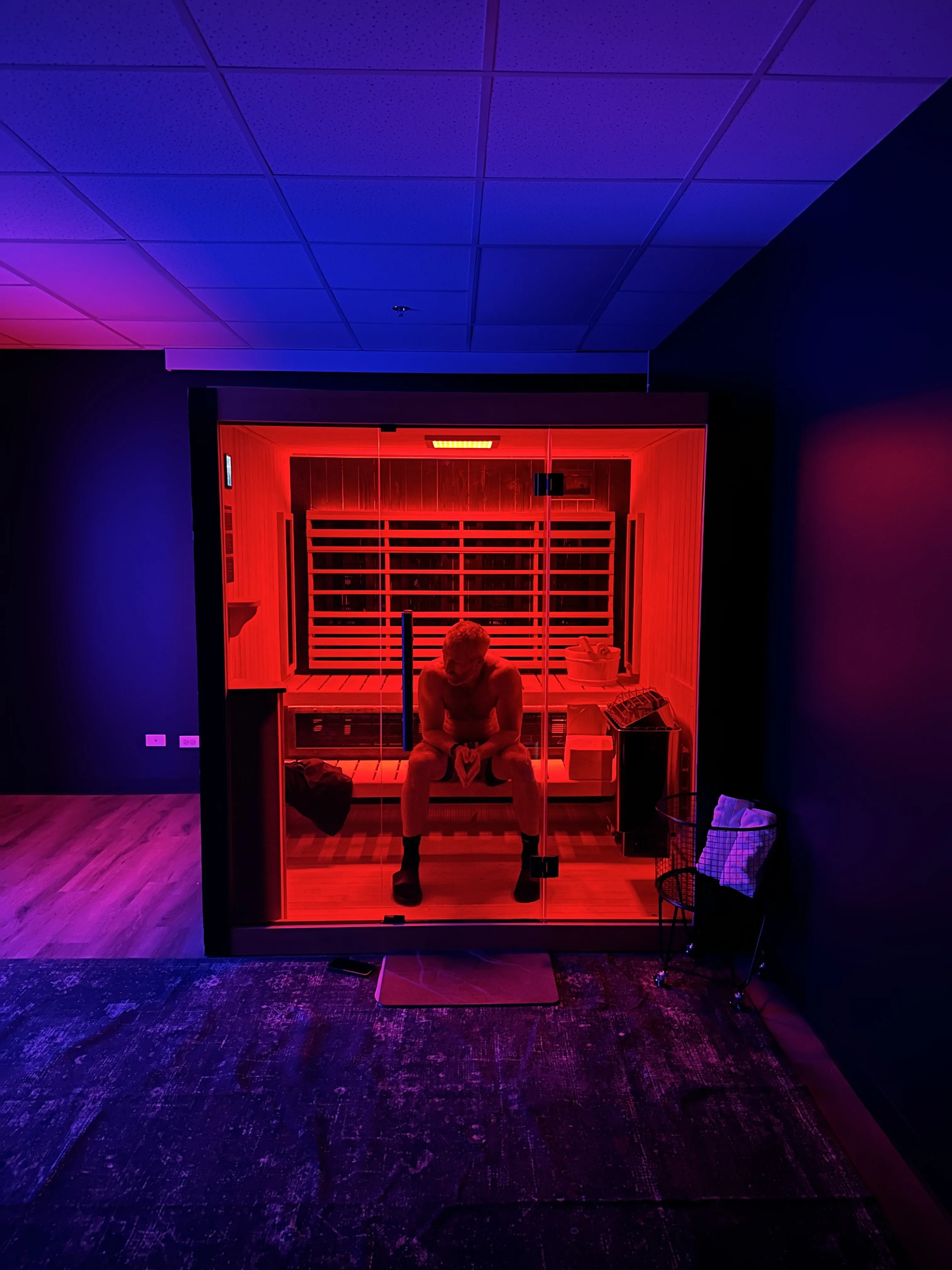
Infrared saunas use infrared light to heat the body directly, rather than heating the air around you. The air stays cooler, usually between 110 and 140°F, but you still sweat and your core temperature still rises. The experience feels more like sitting in strong sunlight than sitting in a hot room.
Because the air temperature is lower, infrared sessions are usually longer (30 to 45 minutes is normal), and many people find them more tolerable. That tolerability is a big deal. The most consistent benefit of sauna comes from regular use over time, and people stick with what they find comfortable.
The research base for infrared is smaller than for traditional sauna, but the findings have generally been positive45: improvements in blood pressure, vascular function, recovery from exercise, and pain in specific conditions. Most studies are short and small compared with the Finnish cohort data on traditional sauna, so the case is still developing.
Heart Rate and Cardiovascular Load
Both types of sauna raise heart rate and put your cardiovascular system to work. Traditional sauna does this faster and more aggressively because of the higher air temperature. Infrared does it more gradually, but over a longer session the total cardiovascular load can be similar.
If you already do hard cardiovascular training, sauna is not replacing your workouts. It is layering on top of them as a passive heat stress that may improve vascular function over time. If you have a known cardiovascular condition, talk to your provider before adding regular sauna use, especially at high temperatures.
Tolerance and Session Length
Traditional sauna asks more of you per minute. Sessions are shorter, the heat hits hard, and you typically need to step out, cool down, and possibly go back in for a second round. Infrared lets you settle in for a longer single session that builds slowly.
For people new to sauna, infrared is often the easier on-ramp. For people who already love high-heat exposure, traditional sauna can feel more rewarding and more efficient time-wise. Neither is wrong, and some patients alternate sauna with whole-body cryotherapy in Lisle, IL for a hot-cold recovery loop. The best sauna is the one you will actually use 3 to 5 times a week.
Who Should Choose Which?
Traditional Sauna Is the Better Fit If You...
- Love intense heat and a more traditional sauna ritual
- Want the deepest research base behind your routine
- Have time-limited windows and want shorter, more intense sessions
- Tolerate high air temperatures well
- Are using sauna primarily as cardiovascular conditioning
Infrared Sauna Is the Better Fit If You...
- Are new to sauna or heat-sensitive
- Want a longer, calmer session you can actually relax in
- Are using sauna for recovery, soreness, or stress reduction
- Prefer dry heat over steamy, high-humidity environments
- Want to combine sauna time with reading, meditation, or BrainTap
A lot of people dismiss the "enjoy the experience" angle, but it is the single best predictor of whether you keep showing up, which is why some patients pair a calm session with BrainTap meditation in Lisle, IL. A protocol you actually do beats a protocol you theoretically should do.
You Don't Have to Pick
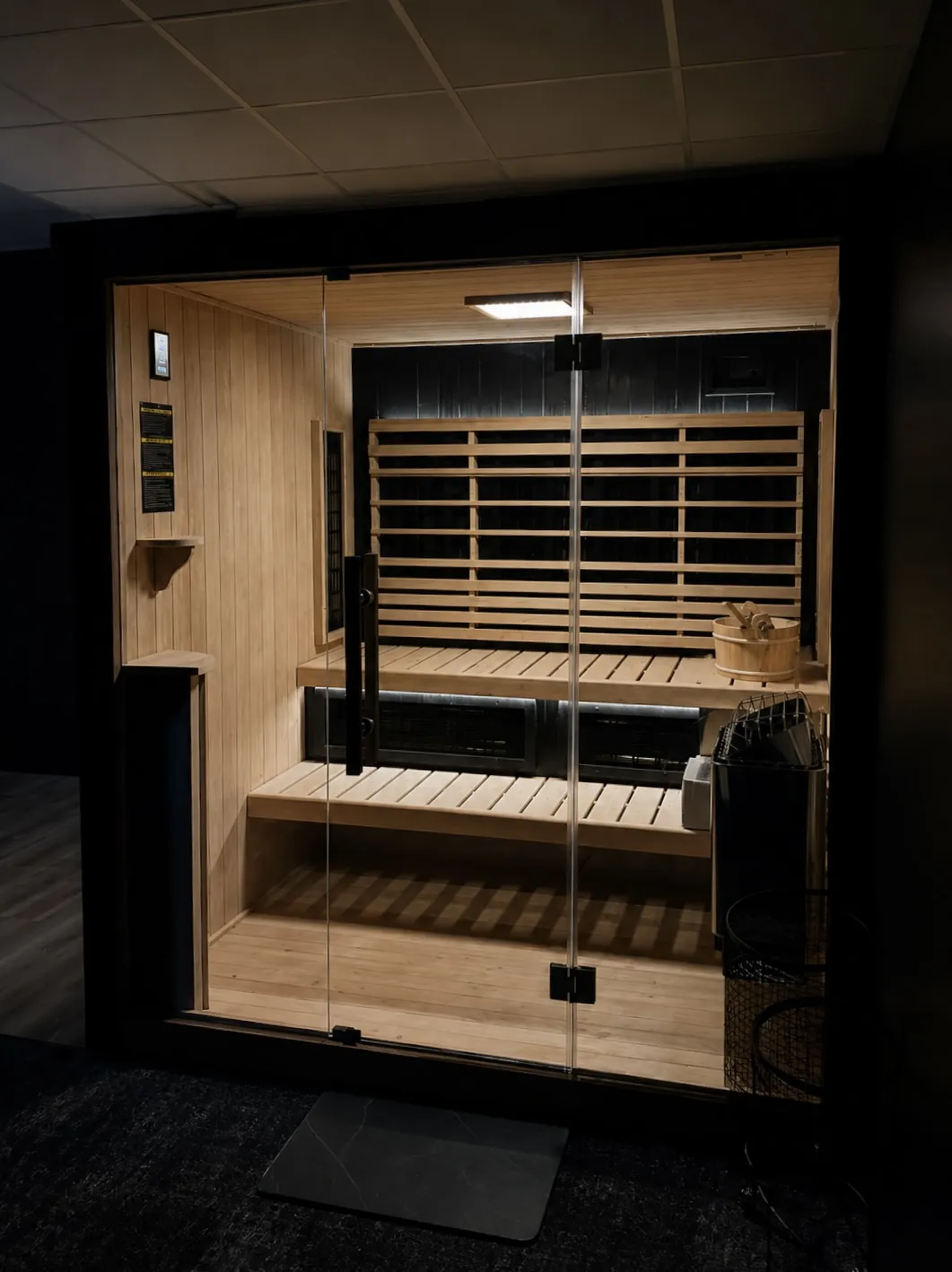
For many of our patients, the answer is both, used for different reasons. Infrared (like the Radia IR 300 we use at Defiant) for longer, calmer recovery and stress-reduction sessions. Traditional sauna for the harder, shorter cardiovascular pushes when that is what you want. Heat is heat, and your body adapts to both.
What matters more than the format is the frequency. The benefits of sauna show up with consistent use, ideally several times a week, over months, and many patients stack a session with contrast therapy in Lisle and Naperville to round out recovery. One great session a month does not move the needle. Three okay sessions a week do.
Frequently Asked Questions
How Defiant Approaches This Decision
Sauna is one piece of a broader recovery and longevity routine at Defiant. We use infrared sauna as the in-house option because it pairs well with longer, calmer recovery work and stacks naturally with services like HBOT, peptide therapy, and IV recovery. For patients who already love traditional sauna and have access to one, we encourage keeping it in the mix. The biology rewards consistent heat exposure either way.
- Traditional sauna heats the air to 150 to 195°F. Infrared heats the body directly at lower air temperatures, usually 110 to 140°F.
- The deepest research base sits with traditional sauna, especially long-term Finnish cohort data linking frequent use to better cardiovascular and longevity outcomes.
- Infrared is generally easier to tolerate, which is why sessions run longer and adherence tends to be better for heat-sensitive users.
- The benefits of sauna come from consistent use, ideally several times per week, not from any single session.
- You do not have to pick one. Many Defiant patients use infrared for recovery and traditional sauna for cardiovascular pushes.
Try both. Build the routine around what you're after.
Sauna works when it is consistent. Book an infrared session at Defiant and pair it with cryo, HBOT, or IV recovery if you want a full stack.
Keep Reading
Last updated May 24, 2026.
References
- Laukkanen T, Khan H, Zaccardi F, Laukkanen JA. Association between sauna bathing and fatal cardiovascular and all-cause mortality events. JAMA Intern Med. 2015;175(4):542-548. JAMA Internal Medicine
- Laukkanen JA, Laukkanen T, Kunutsor SK. Cardiovascular and other health benefits of sauna bathing: a review of the evidence. Mayo Clin Proc. 2018;93(8):1111-1121. Mayo Clinic Proceedings
- Kunutsor SK, Khan H, Zaccardi F, Laukkanen T, Willeit P, Laukkanen JA. Sauna bathing reduces the risk of stroke in Finnish men and women: a prospective cohort study. Neurology. 2018;90(22):e1937-e1944. Neurology
- Beever R. Far-infrared saunas for treatment of cardiovascular risk factors: summary of published evidence. Can Fam Physician. 2009;55(7):691-696. PubMed Central
- Hussain J, Cohen M. Clinical effects of regular dry sauna bathing: a systematic review. Evid Based Complement Alternat Med. 2018;2018:1857413. PubMed Central